


Now that we’ve seen how the global monetary landscape is changing, the next question is simple:
How does this affect India’s national interests?
This piece grounds the conversation directly in India’s realities - our economy, our geopolitical position, our youth, and our emerging digital future.
4. What All This Means for India - In Plain Terms
Let me zoom out and translate this into Indian strategic language.
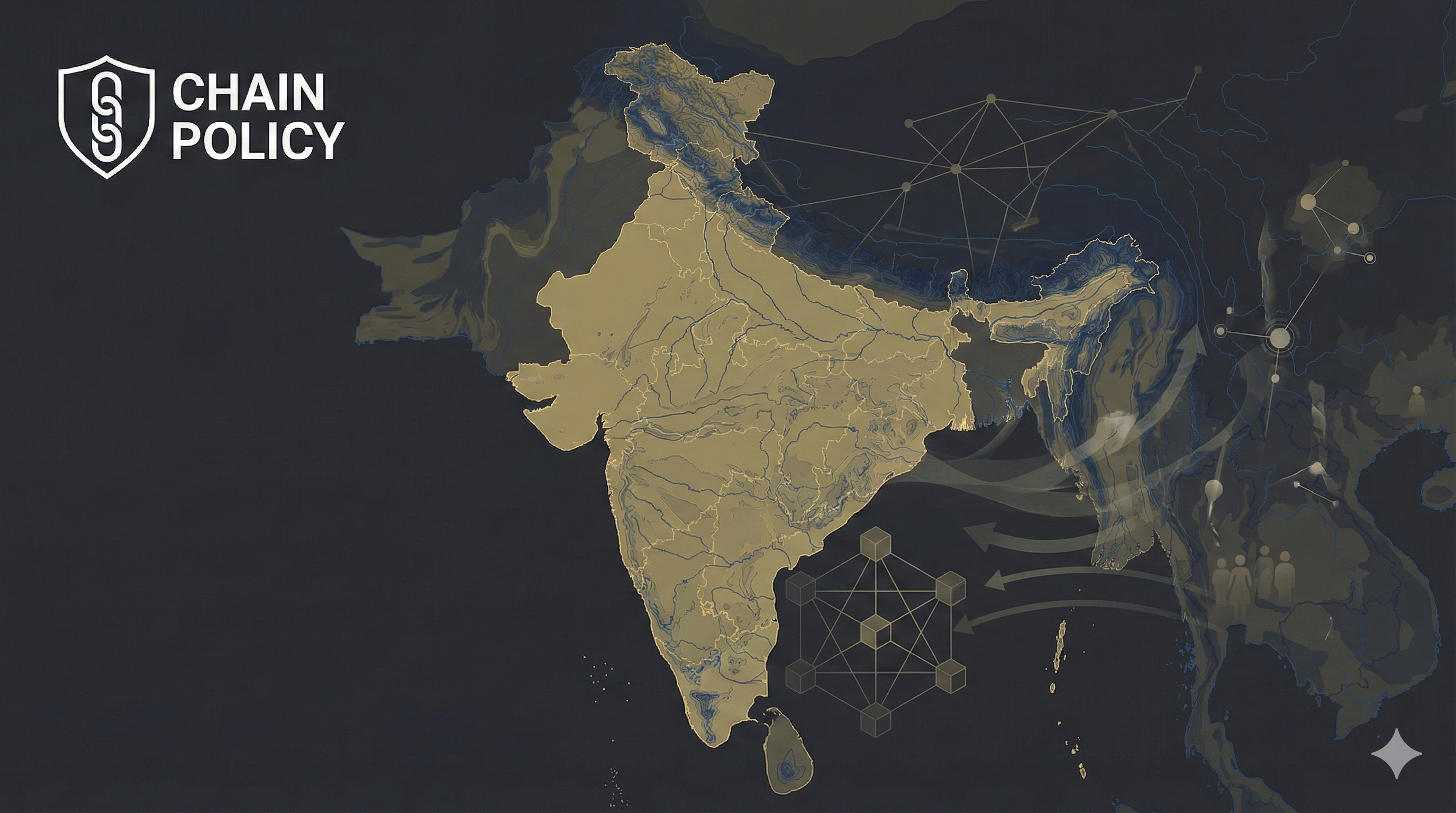
4.A - Monetary Sovereignty & Strategic Autonomy
In this world, having:
Some understanding of Bitcoin
Some capacity to use its rails if absolutely necessary
Some legal and regulatory grip over how Indians interact with it
…is just prudent statecraft.
You don’t need to “adopt” Bitcoin to benefit from optionality.
4.B - Economic Competitiveness & Innovation
If we:
Over-penalize or over-ban
Keep 1% TDS like a tax on breathing
Block banks from working with any Bitcoin-touching entity
…we don’t make Bitcoin go away.
For a country that proudly talks about UPI, ONDC, DPI, and startup unicorns, that’s a strange strategic choice.
So when we talk about “ignoring Bitcoin”, we’re not actually stopping Indians from touching it. We’re just:
Pushing activity offshore
Giving up tax revenue
Losing visibility
Sacrificing strategic influence
That is not good policy.
4.C - Youth, Savings, and Political Reality
Indian youth are already:
Using global exchanges
Learning about Bitcoin on YouTube, X, Telegram
Using stablecoins and BTC as part of their savings or speculation
Policy that doesn’t acknowledge this doesn’t make us “conservative and safe”. It makes us out of touch.
If a generation’s savings behaviour is changing, the state has two choices:
Pretend it isn’t happening, or
Engage, regulate, and gently steer
I strongly favour option 2.
4.D - National Security & Contingency Planning
Do I think India should suddenly rush to put Bitcoin on RBI’s balance sheet tomorrow morning? No.
But do I think someone in Delhi should be seriously modelling:
“What if US Treasuries become more politically sensitive as a reserve asset?”
“What if certain trade flows need alternative settlement rails in a crisis scenario?”
“What if we ever face coordinated financial pressure and need optionality?”
Yes. I think we’d be negligent not to.
Bitcoin is not a silver bullet. But it is a live wire in the global monetary system. You don’t ignore live wires; you map them carefully.
Understanding the “why” is not enough. India now needs a clear, minimal, actionable path forward — not hype, not fear, but strategy.
Part 3 outlines concrete policy steps India can take - incremental, controlled, and aligned with national interest.
Why India Cannot Ignore Bitcoin (Part 3): A Strategic, Incremental Policy Roadmap for India

After understanding the global context (Part 1) and India’s strategic interests (Part 2), the next step is to ask:
In case you missed Part 1, find it here.
I write to bring clarity to how Bitcoin intersects with policy, regulation, and sovereign systems.
If this clarified something about Bitcoin and policy for you, you can subscribe to Chain Policy to receive future essays directly.
Every subscription is a vote for better conversations about Bitcoin policy.
And if this sharpened your perspective, take a few seconds to share it — it might help shape how someone else understands Bitcoin and policy.